Showing posts with label English B. Show all posts

Tuesday, June 2, 2015

Genocide Group PowerPoint Directions

After reading Night, you have gleaned some insight into two of the most horrific attempts at genocide in the history of the world.  Genocide is the deliberate and systematic extermination of a national, racial, political, or cultural group.

Your task now is to create a PowerPoint about at least one instances of genocide.  **Since we are working group, you MUST choose an instance that is not being covered by another student. You MUST also use only QUALITY RELIABLE websites and include them in correct bibliographic form in the group's bibliography.  Here are some quality websites to get you started with your research:
Genocide Studies Project, Yale University.  <http://www.yale.edu/gsp/index.html>
Genocide Watch.  <http://www.genocidewatch.org/>
Peace Pledge Union.  <http://www.ppu.org.uk/genocide/>
United States Holocaust Memorial Museum.  <http://www.ushmm.org/>


 Each of the genocide incidents that you discuss should cover the following:

  • Who perpetrated the attacks and who was targeted?
  • Where and when did/is this happen(ing)?
  • Why did this happen?  What were the causes?
  • How many people have been affected (deaths, injuries, refugees)?
  • What has happened to those affected?
  • What has happened to those who perpetrated violence?
  • What other effects have occurred as a result (to the government of affected countries as well as the response of other countries, especially)?

Again, please avoid Wikipedia since anyone can contribute to or change any entry on this site; since these are highly controversial topics and I am giving you plenty of time, you can avoid this resource!


Friday, March 27, 2015

Night by Elie Wiesel

Vocabulary: to view the Slideshow, click HERE. Copy down all words and definitions onto your vocabulary packet.

Tuesday, March 10, 2015

A Raisin in the Sun: Research Activity

Complete a poster, Power Point, research paper, or some other presentation about one of the following topics that addresses the questions included.

Option A: A Raisin in the Sun is about a black family overcoming racism and history to achieve the American Dream. Choose a person who has achieved what you consider is the American Dream, despite some sort of setback or setbacks. Research the major points in his or her life describing particularly:
·        your definition of the American Dream & how that person has achieved it
·        the setbacks he/she overcame
·        how he/she overcame those setbacks
·        the success he/she achieved
·        how he/she achieved it
·        what you personally have learned from his/her life

Option B:  A Raisin in the Sun was written during the early civil rights period. Research and describe at least FIVE major events of the Civil Rights Movement. Alternately, you may research the women’s rights movement or the #blacklivesmatter movement. For each event, discuss the following:
·        When did it happen?
·        Where did it happen?
·        What happened?
·        Who was involved?
·        Why did it happen? What were the causes?
·        How did it impact the movement? What were the effects?

ALL of these should include the following:
·        a BIBLIOGRAPHY with MULTIPLE RELIABLE SOURCES (no Wikipedia for this project, sorry)
·        Pictures cited or hyperlinked
·        Correct citations: DO NOT PLAGIARIZE! For more information on plagiarism, see below.
Unless you properly cite it, you are not allowed to turn in for a grade anything that someone else has created: that includes any sentences or phrases, thoughts or ideas, images or graphs.  In A Primer on Plagiarism, Louis Sirico says students typically commit plagiarism in one of three ways:
·        using someone else’s words without quotation marks or citation.
·        paraphrasing someone else’s words without citation.
·        using someone else’s ideas without citation.

Plagiarism is also defined as:
·        copying or paraphrasing all or part of another’s homework.
·        allowing another person to copy or paraphrase your work.
·        receiving help on assignments that have been identified by the teacher as work to be completed individually.


Consequences of plagiarism: I will not accept plagiarized work. You will continue to revise/edit until there are no traces of plagiarism anywhere in your work. Furthermore, your grade will be affected if you do not fix your work.

Wednesday, February 4, 2015

A Raisin in the Sun Vocabulary

Copy the words and definitions onto your vocabulary sheet from the PowerPoint. You may also want to copy the page numbers. If you have time, start working on drawings, synonyms, or sentences.

Friday, December 12, 2014

Great Gatsby CH 7

Listen Here. If you were in class on Friday, you can begin at 31:13 and then listen to Ch. 8 here.

Monday, December 1, 2014

Great Gatsby Chapter 3

Nick goes to a party at Gatsby's house and finally meets the "Great" Jay Gatsby in chapter 3 and Nick gets to know Jordan Baker a little better as well. Listen to the audio version here or at 10:41 here.


Monday, November 17, 2014

The Great Gatsby Vocabulary

View the PowerPoint and copy the words and their definitions on your vocabulary packet.


Tuesday, September 9, 2014

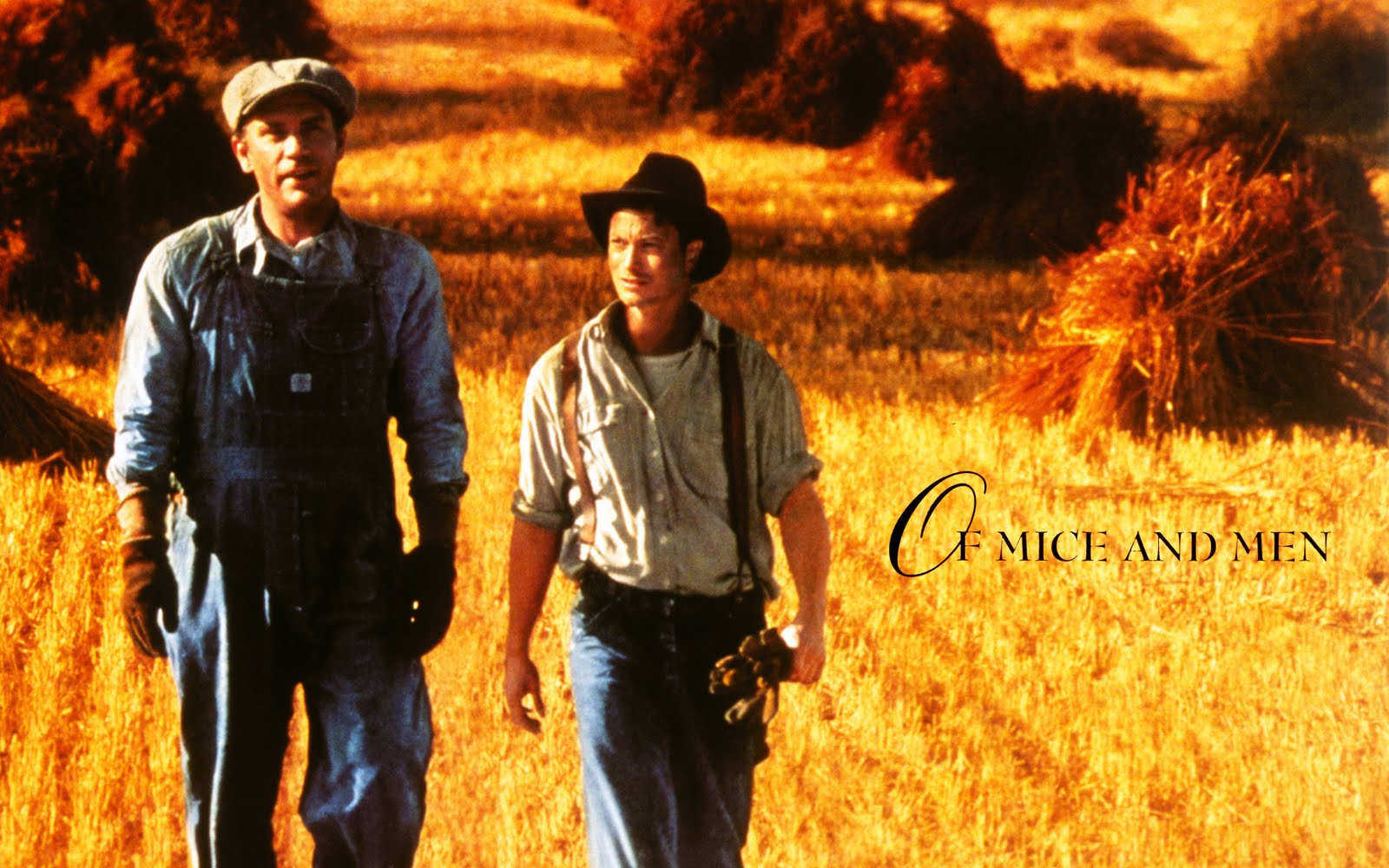
Of Mice and Men Vocabulary

Use this PowerPoint to fill in your vocabulary words and their definitions on your vocabulary packet for John Steinbeck's Of Mice and Men.


Saturday, August 16, 2014

Literary Terms to Know & Use

For your chosen concept, please complete at least one of each of the following:

  • clear, understandable definitions
  • examples from a familiar children's story (like a fairy tale)
  • examples from a work studied in high school
  • examples from a popular movie, TV show, or other work
  • some sort of graphic illustration to help us remember the concepts (this may be incorporated with an example or examples)

Concepts:
  • conflict (discuss all four types)
  • plot (discuss exposition, rising action, climax, falling action, & resolution)
  • making connections (discuss juxtaposition, foreshadowing, flashback, and allusion)  
  • point of view (discuss the three major types)
  • irony (discuss the three major types & paradoxes)
  • characterization (discuss implicit vs. explicit as well as static vs. dynamic characters and round vs. flat)
  • thematic elements (theme, motif, & symbols, archetypes)
  • author's craft (genre, mood, imagery, & syntax)
  • diction (connotation vs. denotation, oxymoron, & pun)
  • figurative language (discuss simile, metaphor, personification, & hyperbole)
  • sound devices (alliteration, onomatopoeia, slant rhyme, & true rhyme)


Tuesday, January 28, 2014

Lord of the Flies by William Golding Audiobook

If you miss class while we are reading Lord of the Flies by William Golding aloud, please use this guide to help you catch up. You may listen to the audiobook and follow along if you prefer.


Wednesday, January 15, 2014

English B Midterm Essay

Multi-Work Theme Essay.                                   ___/20 points

This should be a well-formed essay with a clear thesis, ample supporting evidence, strong organization, and editing that has made it very readable! See the rubric given to you by your teacher. 

You should choose one of the following prompts to write about:


OPTION A:
Human connections seem to be difficult things to achieve in the works we studied this semester. In a well-organized essay, explore what the authors (Keyes/Jackson and Saint-Exupéry) are saying about what friendship and/or loyalty means and why it seems to be so difficult. Think, too, about your own real life examples.

Think about this: What is friendship/loyalty and why is it so difficult?

OPTION B:
Individuality is a theme that we’ve explored this semester. In a unified essay, explore what the authors (Keyes/Jackson and Saint-Exupéry) are saying about the nature of being an individual as well as your own observations from real life.
Think about this: Is being different a blessing or a curse?

OPTION C:
Decisions and the consequences of those decisions is a theme that we’ve explored this semester. In a unified essay, explore what the authors (Keyes/Jackson and Saint-Exupéry) are saying about how we make choice; additionally, draw on your own observations from real life.
Think about this: How do we know that the choices we make are the right choices?

Tuesday, September 24, 2013

Tuesday, September 17, 2013

Flowers for Algernon Vocab


  • Implication: something that is hinted at but not stated directly
  • Ornate: highly decorated, flashy
  • Platonic: having to do with the spiritual, not the physical
  • Docile: ready to accept control or direction
  • Pathology: outside of the normal state, disease
  • Prognosis: prediction of a disease's outcome
  • Admonish: criticize or warm gently but firmly
  • Erratic: lacking consistency, unpredictable
  • Juxtaposition: placed side by side for comparison
  • Futile: incapable of producing a meaningful result, pointless
  • Naivete: lacking experience, wisdom, or judgement
  • Deteriorate: go down in quality
  • Cynical: distrustful of others
  • Inevitable: impossible to avoid/prevent
  • Labyrinth: maze
  • Fugue: period of extreme forgetfulness


Tuesday, September 3, 2013

Literary Terms to Know & Use

For your chosen concept, please complete the following:

  • clear, understandable definitions
  • examples from a familiar children's story (like a fairy tale)
  • examples from a work studied in high school
  • examples from a popular movie, TV show, or other work
  • some sort of graphic illustration to help us remember the concepts (this may be incorporated with your examples)
Concepts:
  • conflict (discuss all four types)-Bryan
  • plot (discuss exposition, rising action, climax, falling action, & resolution)-Jesstine
  • making connections (discuss foreshadowing, flashback, and allusion)-Jade or Danielle  
  • point of view (discuss the three major types)-Joey
  • irony (discuss the three major types & paradoxes)-Koree
  • characterization (discuss protagonist vs. antagonist as well as static vs. dynamic characters and foils)-Bry
  • thematic elements (theme, motif, & symbols, archetypes)-Janelle
  • author's craft (mood, juxtaposition, imagery, & diction)-Megan
  • diction (connotation vs. denotation, oxymoron, & pun)-Jade or Danielle
  • figurative language (discuss simile, metaphor, personification, & hyperbole)-Celenia
  • sound devices (alliteration, onomatopoeia, slant rhyme, & true rhyme)-Adara

Thursday, June 6, 2013

Quotation ID Exemplars

"After all the highways, and the trains, and the appointments, and the years, you end up worth more dead than alive."


  • Willy says you are worth more dead than alive. I think this foreshadows whats gonna happen with the suicide because he had life insurance of 20,000 I believe and that is how much he was worth dead when he tried working his whole life so that his family could be stable and he thought the only way that could happen was if he died. It shows how this play was a tragedy.


"The jungle is dark but full of diamonds, Willy."


  • Ben was saying this to Willy when Willy was in one of his episodes toward the end of the play and I think it means money is out there you just gotta do whatever you have to do for it. I think in Willy's head Ben was in a way telling him its okay to kill yourself because money is the most important thing to Willy.


 "S'pose you didn't have nobody. S'pose you couldn't go into the bunk house and play rummy 'cause you was black. How'd you like that? S'pose you had to sit out here an' read books. Sure you could play horseshoes till it got dark, but then you got to read books. Books ain't no good. A guy needs somebody - to be near him. A guy goes nuts if he ain't got nobody. Don't make no difference who the guy is, long's he's with you. I tell ya, I tell ya a guy gets too lonely an' he gets sick."


  • Crooks says this to Lennie when he finally lets him into his room. While everyone else is over playinger horseshoes. Crooks is referring to to the fact that being alone is awful and how he's segregated for being black. This also has to do with the theme of loneliness. Because unlike George and Lennie, he is alone, like everyone else in the book.


 "Whatever we ain't got, that's what you want. God a'mighty, if I was alone I could live so easy. I could go get a job an' work, an no trouble. No mess at all, and when the end of the month come I could take my fifty bucks and go into town and get whatever I want."

  • In this quote George is explaining and ranting to Lennie on how better life would be without him. He explodes all of his frustration on to Lennie. And I feel like hurts Lennie on the inside. But honestly he is to slow to say anything back. George is hard on Lennie. Read that quote and anyone would think so. But in all reality George loves Lennie to death. And if he feel like he is hard on him just to get him in gear.


Wednesday, June 5, 2013

Assessment 21: Reading Comprehension & Essay

1.     Go online to AcademicMerit.com.
2.     Log in.
3.     Select the Assessments 21 button.
4.     Read the “Audie Murphy” text.
5.     Complete the Comprehension Questions (Worth 5 Points).
6.     Complete the Writing Prompt (remember to refer to the rubric and the text before you submit your response) (Worth 20 Points).


Wednesday, May 22, 2013

A RAISIN IN THE SUN by Lorraine Hansberry: Follow-up Activity Options


  • Option A: Write a children’s book with illustrations about the life of the author, Lorraine Hansberry.  This should be in your own words and written at the reading level of an elementary school student.  Be sure to discuss how her life influenced the plot, characters, and/or themes of A Raisin in the Sun.  Copy and paste ALL sources used into a bibliography (the website address is fine).  With a cover/title page and the bibliography, your story should be at least 7 pages long (but, each page does not need to have a lot of writing!).
  • Option B:  Write the sequel or ending to the play.  You may write this in play form, as a series of letters/journal entries written by the characters, or as a traditional 1st or 3rd person narrative.  Think about and answer the following with clear justification about how and why these things happen: What happens to the Youngers in Clybourne Park? Does Beneatha go to Africa and/or become a doctor? Does Ruth have the baby? What kind of a man is Walter now? What about Mama and Travis? Think about cause and effect and motivation and societal influences when answering these questions.
  • Option C: Write (at least) a five paragraph literary analysis essay about the plant as a symbol in the play.  You must include quotations (correctly cited) and analyze them from at least three different scenes that discuss the plant or gardening or something to do with the plant.  See quotes below for help:
    • Mama: “Lord, if this little old plant don’t get more sun than it’s been getting it ain’t never going to see spring again.” (40)
    • Mama: "Lord, child, you should know all the dreams I had 'bout buying that house and fixing it up and making me a little garden in the back.... And didn't none of it happen." (45)
    • Mama: “They spirited all right, my children. Got to admit they got spirit—Bennie and Walter. Like this little old plant that ain’t never had enough sunshine or nothing—and look at it… " (52)
    • Mama: “Well, I always wanted me a garden like I used to see sometimes at the back of the houses down home. This plant is close as I ever got to having one.” (53)
    • Ruth: "Is there--is there a whole lot of sunlight?" Mama: "Yes, child, there's a whole lot of sunlight." (94)
    • Mama: "Oh, Big Walter, is this the harvest of our days?" (106)
    • Beneatha: “Mama, what are you doing?” Mama: “Fixing my plant so it won’t get hurt none on the way…” Beneatha: Mama, you going to take that to the new house?” Mama: “Un-huh—“ Beneatha: “That raggedy-looking old thing?” Mama: It expresses ME!” (121)
    • Mama: "Now I don't have to use my knives and forks no more..." (123)
    • Travis: "It's a gardening hat! Like the ladies always have on in the magazines when they work in their gardens." (124)
    • Mama: "You what supposed to be my beginning again. You--what supposed to be my harvest." (144)
    • Mama grabs her plant and exits the apartment for the last time. (151)


Thursday, April 25, 2013

A Raisin in the Sun

After reading and analyzing "Harlem," reading about Lorraine Hansberry, and making predictions about A Raisin in the Sun, watch the following movie trailers to revise your predictions:


Monday, April 22, 2013

MLA Citations

To practice writing correct citations, watch me model one, then let's do one together, and last, you will do two on your own.  Use NoodleTools to help you.

For English A, cite the following:

"Meet a Warrior." Mission. 2013. Wounded Warrior Project. 22 Apr. 2013 
<http://www.woundedwarriorproject.org/mission/meet-a-warrior.aspx>.
 "The Things They Carried." The Big Read. National Endowment for the Arts. 22 Apr. 2013 <http://www.neabigread.org/books/thethingstheycarried/>.

http://www.va.gov/landing2_vetsrv.htm
Tim O'Brien's The Things They Carried


For English B, cite the following:


"Genocide Studies Program." 2010. Yale University. 22 Apr. 2013 <http://www.yale.edu/gsp/index.html>.

 "Genocide Watch." . 19 Apr. 2013. International Alliance to End Genocide. 22 Apr. 2013 <http://www.genocidewatch.org/>.

Peace Pledge Union.  <http://www.ppu.org.uk/genocide/>
United States Holocaust Memorial Museum.  <http://www.ushmm.org/>
Night by Elie Wiesel

Monday, March 25, 2013

Genocide Research Project


After reading Night, you have gleaned some insight into two of the most horrific attempts at genocide in the history of the world.  Genocide is the deliberate and systematic extermination of a national, racial, political, or cultural group.

Your task now is to create a PowerPoint about at least two instances of genocide.  **If you would like to work in a group, you MUST add two more instances per group member and you MUST work on a collaborative tool, such as Google Docs.  You should include the Holocaust and Darfur in Sudan as your two minimum instances of genocide.  I have included Darfur as a requirement because of the local presence of Sudanese refugees in and around our community who have been fortunate to escape the atrocities committed in Darfur, a region of Sudan.  Here are some quality websites to get you started with your research:
Genocide Studies Project, Yale University.  <http://www.yale.edu/gsp/index.html>
Genocide Watch.  <http://www.genocidewatch.org/>
Peace Pledge Union.  <http://www.ppu.org.uk/genocide/>
United States Holocaust Memorial Museum.  <http://www.ushmm.org/>

Each of the genocide incidents that you discuss should cover the following:
  • Who perpetrated the attacks and who was targeted?
  • Where and when did/is this happen(ing)?
  • Why did this happen?  What were the causes?
  • How many people have been affected (deaths, injuries, refugees)?
  • What has happened to those affected?
  • What has happened to those who perpetrated violence?
  • What other affects have occurred as a result (to the government of affected countries as well as the response of other countries, especially)?

Your project should include: a title slide, at least two slides for each of your examples of genocide, and on your last slide, YOU MUST INCLUDE A BIBLIOGRAPHY.  So, keep track of ANY websites where you get your information and pictures/graphics, and please avoid wikipedia since anyone can contribute to or change any entry on this site; since these are highly controversial topics and I am giving you plenty of time, you can avoid this resource!

Please refer to the rubric below. 
Who perpetrated the attacks and who was targeted?                                                
Where and when did/is this happen(ing)?                                                                
Why did this happen?  What were the causes?                                                         
How many people have been affected (deaths, injuries, refugees)?                        
What has happened to those affected? What has happened to the perpetrators?    
What other affects have occurred as a result?                                                                      
DON’T FORGET: Title page, creativity, neatness, inclusion of appropriate graphics, and a Bibliography!

*********************************************************************************
PLANNING SHEET:
            Incident of genocide: ______________________________________________________

Who perpetrated the attacks and who was targeted?

Where and when did/is this happen(ing)? (be specific)

Why did this happen?  What were the causes?

How many people have been affected (deaths, injuries, refugees)?

What has happened to those affected?

What has happened to those who perpetrated violence?

What other affects have occurred as a result (to the government of affected countries as well as the response of other countries, especially)?