Showing posts with label American History. Show all posts
Showing posts with label American History. Show all posts
Monday, November 2, 2015
Videos about the Early Stages of U.S. Government
The Constitution, the Articles, and Federalism: Crash Course US History #8 (13:00)

Monday, June 8, 2015
Early Automobiles & Airplanes
"Car Invented, World Drastically Changed":
"Henry Ford and the Model T":
http://www.history.com/topics/henry-ford/videos/henry-ford-and-the-model-t?m=528e394da93ae&s=undefined&f=1&free=false
"Wright Brothers":
http://www.history.com/topics/inventions/wright-brothers/videos/wright-brothers?m=528e394da93ae&s=undefined&f=1&free=false
"Henry Ford and the Model T":
http://www.history.com/topics/henry-ford/videos/henry-ford-and-the-model-t?m=528e394da93ae&s=undefined&f=1&free=false
"Wright Brothers":
http://www.history.com/topics/inventions/wright-brothers/videos/wright-brothers?m=528e394da93ae&s=undefined&f=1&free=false
Tuesday, February 10, 2015

Monday, January 12, 2015
US History Midterm Exam Essay Questions
Section 4: Essay (10
points each): Complete THREE of the essays. Students should type or handwrite responses
as three well-written short essays that are at least a paragraph each. Refer to the rubric below for more
information. 30 points total.
- Discuss two uniquely
American values and their influence on the periods of time we have studied
this semester. How have these
values been honored in the actions of the American people and influences
the course of U.S. history? How and
why have these values been disregarded?
Are these values being honored today?
- Discuss the debate over
Revolution. Discuss both sides (for
and against Revolution) of the debate with specific reasons and examples
for both sides. Discuss specific
events and causes that led to the Revolution as well as your opinion of
such events. If you were alive
during the time period, which side would you have been on and why?
- Discuss the debate over
abolition. Define the different
degrees that people were for and against abolition, naming specific
supporters/opponents. Give multiple
reasons on both sides of the debate as to why people were for abolition
and people were against it. How
does this debate relate to another debate or debates that we in the United
States have today?
- Discuss Manifest Destiny:
Is it a good thing or not? What was it? What were some different events
that were caused by it? What were the positive and negative effects of it?
In what ways do you see similar ideas/events today? What are your opinions
of these contemporary manifestations of Manifest Destiny?
- Was Reconstruction
successful? Provide arguments and evidence for both sides but provide an
overall thesis with ample support.
- Choose one historical
person and discuss his/her impact on American history. How did that one
person affect the trajectory of the United States? Give specific things
that he/she said/did and explain their effects on the country’s future.
Overall, was this person a positive or negative influence on the U.S.?
How/Why?
RUBRIC
- 10 points = Student clearly
answers all parts of the prompt, providing multiple specific and relevant
examples from his/her studies and/or observations. Writing has a clear introduction (thesis
in which an original argument is asserted), body, and conclusion.
- 9 points = Student clearly
attempts to answer all parts of the prompt, providing some specific and
relevant evidence from his/her studies and/or observations. Writing has a clear introduction
(thesis), body, and conclusion.
- 8 points = Student answers
most parts of the prompt, providing relevant evidence from his/her studies
and/or observations. Writing has a
clear introduction, body, and conclusion.
- 7 points = Student attempts
to answer the main part of the prompt, providing somewhat relevant
evidence from his/her studies and/or observations. Writing has a clear introduction and
body.
- 1-6 points = Student’s
answer lacks clarity and/or organization discussed above.
Thursday, November 6, 2014

Saturday, February 1, 2014
25.3: The War in North Africa and Europe Videos
Follow the links to the videos to complete the prompts you were given.
- “North Africa Campaign” 1:42 @
- “Battle of Stalingrad” 2:22 @ https://youtu.be/do15W5yY1BI
- “D-Day” 1:43 @

Wednesday, January 15, 2014
U.S. History Midterm Essays
Section 4: Essay (10
points each): Complete THREE of the essays. Students should type or handwrite responses
as three well-written short essays that are at least a paragraph each. Refer to the rubric below for more
information. 30 points total.
- Discuss two uniquely
American values and their influence on the periods of time we have studied
this semester. How have these
values been honored in the actions of the American people and influences
the course of U.S. history? How and
why have these values been disregarded?
Are these values being honored today?
- Discuss the debate over
Revolution. Discuss both sides (for
and against Revolution) of the debate with specific reasons and examples
for both sides. Discuss specific
events and causes that led to the Revolution as well as your opinion of
such events. If you were alive
during the time period, which side would you have been on and why?
- Discuss the debate over
abolition. Define the different
degrees that people were for and against abolition, naming specific
supporters/opponents. Give multiple
reasons on both sides of the debate as to why people were for abolition
and people were against it. How
does this debate relate to another debate or debates that we in the United
States have today?
- Discuss Manifest Destiny:
Is it a good thing or not? What was it? What were some different events
that were caused by it? What were the positive and negative effects of it?
In what ways do you see similar ideas/events today? What are your opinions
of these contemporary manifestations of Manifest Destiny?
- Was Reconstruction
successful? Provide arguments and evidence for both sides but provide an
overall thesis with ample support.
- Choose one historical
person and discuss his/her impact on American history. How did that one
person affect the trajectory of the United States? Give specific things
that he/she said/did and explain their effects on the country’s future.
Overall, was this person a positive or negative influence on the U.S.?
How/Why?
RUBRIC
- 10 points = Student clearly
answers all parts of the prompt, providing multiple specific and relevant
examples from his/her studies and/or observations. Writing has a clear introduction (thesis
in which an original argument is asserted), body, and conclusion.
- 9 points = Student clearly
attempts to answer all parts of the prompt, providing some specific and
relevant evidence from his/her studies and/or observations. Writing has a clear introduction
(thesis), body, and conclusion.
- 8 points = Student answers
most parts of the prompt, providing relevant evidence from his/her studies
and/or observations. Writing has a
clear introduction, body, and conclusion.
- 7 points = Student attempts
to answer the main part of the prompt, providing somewhat relevant
evidence from his/her studies and/or observations. Writing has a clear introduction and
body.
- 1-6 points = Student’s
answer lacks clarity and/or organization discussed above.
Tuesday, October 8, 2013
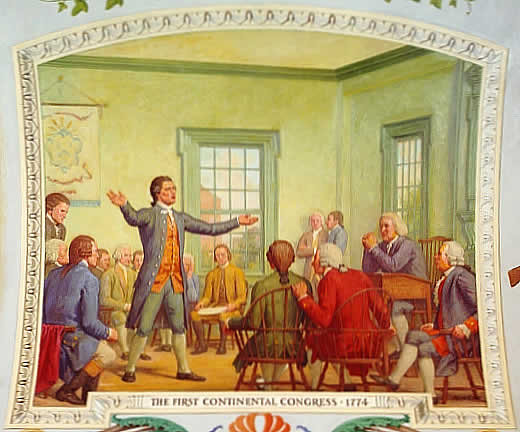
Events Leading up to the Revolution Jigsaw
For your assigned event, neatly, legibly, and colorfully include the following on a blank white piece of paper:
- Name of event
- Date(s)
- Location(s)
- What happened
- How it led to the Revolution
- Your opinion
- A picture
*Note Kapp's examples of the Writs of Assistance and the Stamp Act Congress as well as the student examples already on the wall.
Chandler: Quartering Act
Bryanna: Declaratory Act
Jade: Committees of Correspondence
Joey: Intolerable/Coercive Acts
Jacob: Townshend Acts
If you finish before the end of class, please see Ms. Kappelman to begin a second event for potential bonus points! (Stamp Act, Sugar Act, Tea Act, Colonials burn Gaspee)

Wednesday, June 5, 2013
U.S. History Final Exam Essay Questions
Answer three
prompts in complete paragraphs from three
different sections for 10 points each.
1860s-1900s: The West, Immigration, & The Gilded Age
·
Describe
Native American relations with whites and the U.S. government in the
1800s. Provide evidence and examples to
support your stance.
·
Discuss
immigration in this time period: its causes and effects. Discuss the struggles immi-grants faced;
compare how and why some immigrants were treated differently than others.
·
Explain
the name of the “Gilded Age.” What are
the positive and negative implications of this name? Provide specific examples.
Late 1800s-1910s: American Imperialism & WWI
·
Did
imperialism reflect the U.S.’s loss of belief in those principles that led it
to seek its own independence? Explain by comparing and contrasting at least two
different territories gained by the U.S. as well as differing viewpoints about
imperialism and colonialism.
·
Discuss
the Spanish American War. What were its
causes and effects? Was it a justified war? Why or why not?
·
How
was WWI different from previous wars?
Discuss differences for the non- fighting world as well as differences
in warfare.
1920s-1940s: The Roaring 20s, the Great Depression, & WWII
·
Why
was the 1920s called the Roaring 20s? Which groups benefited the most, and the
least from the prosperity and changes of the 1920s? Explain.
·
What
were the major causes of the Great Depression?
What did the government do (discuss both Hoover’s and Roosevelt’s
approaches)? How effective were these approaches?
·
How
and why did the United States remain neutral in the beginning of World War
II? Why did the United States become
involved in the war and how did they contribute to the war?
1950s-1960s: The Cold War, Civil Rights, & Vietnam
·
Why
did Americans’ Cold War fears center on communism? How did these fears affect both domestic and
foreign policies?
·
What
were the three most important events in the African American civil rights
movement? Describe the causes and
effects of each event within the context of the movement.
·
Compare
and contrast the war in Vietnam with the wars in Iraq and Afghanistan.
1970s-2000s: Contemporary Issues in the United States
·
Discuss
the troubles in the Middle East during the 1970s, 1980s, 1990s, and 2000s. Include at least three major events and/or
policies that affected the United States and our relations with countries in
the Middle East.
·
Discuss
the “green” movement, including at least three different important
events/policies and where you think the movement is headed in the future.
·
Describe
three different advances in technology and medicine in the past 30 years and the
controversy surrounding these. State
your opinion on the subject with support as well as acknowledging the other
side of the topic.
RUBRIC
·
10 points = Student clearly answers all parts of the
prompt, providing multiple specific and relevant evidence (more than 3
examples/details that are highly detailed, relevant, & accurate) from
his/her studies. Writing has a clear
introduction (thesis in which an original argument is asserted), body, and
conclusion that transition well.
·
9 points = Student clearly attempts to answer all parts
of the prompt, providing strong evidence from his/her studies (3 or more,
depending on depth, relevance, & accuracy).
Writing has a clear introduction (thesis), body, and conclusion.
·
8 points = Student answers most parts of the prompt,
providing relevant evidence from his/her studies and/or observations (2 or
more, depending on depth, relevance, & accuracy). Writing has a clear introduction, body, and
conclusion.
·
7 points = Student attempts to answer the main part of
the prompt, providing somewhat relevant evidence from his/her studies and/or
observations (1-2, depending on details, relevance, & accuracy). Writing has a clear introduction and body.
·
1-6 points = Student’s answer lacks clarity, relevance,
accurate evidentiary support, and/or organization discussed above.
Wednesday, May 29, 2013
Review Jigsaw Activity: 1970s to Today
Pick a topic or event that we learned about in our studies of the 1970s, 1980s, 1990s, or 2000s about which to learn and teach the class.
Acceptable topics/events include:
·
Nixon’s visit to China
·
Watergate
·
The EPA & the “green” movement
·
OPEC
·
NAFTA
·
U.S.’s boycott of the Moscow Olympics
·
Iran Hostage Crisis
·
History of NASA from 1970-today
·
First Gulf War
·
War on Drugs
·
Columbine & school violence
·
Oklahoma City Bombing & homegrown terrorism
·
Berlin Wall’s demise & the reunion of
Germany
·
Collapse of the Soviet Union
·
Whitewater & Monica Lewinsky
·
The history of the World Wide Web
·
HIV-AIDS
·
Gay marriage & rights of GLBT people
·
Affirmative Action
·
The Tea Party
·
9/11
·
The gun debate
·
Global warming
·
Health Care Reform
·
The wars in Iraq and Afghanistan
For your topic:
·
Give us the who, what, when, where, how, &
why
·
Give us the background knowledge we need to
understand the history of this topic & its impact today
·
Include pictures, charts, videos, or other
visuals to appeal to all types of learners
·
Keep track of all sources (URL only is acceptable)
in a bibliography

Monday, April 29, 2013
The Holocaust and the Atomic Bomb
The Atomic Bomb
- Watch WWII: Nuclear Bombings of Japan.
- Take notes (these will help you with the next part).
- View the photos of the bombings of Hiroshima and Nagasaki.
- Write a paragraph: Was the use of atomic weapons on Japan a justifiable course of action? Explain. What would justify the U.S.'s use of atomic weapons today? Explain your reasoning with specifics.
The Holocaust
- Watch the video Overview of the Holocaust and take 5+notes
- Could this happen in the U.S. today? Why do some people deny that the Holocaust ever happened?
Friday, April 26, 2013
WWII Battles
Watch the following videos to review some of the major battles of WWII:
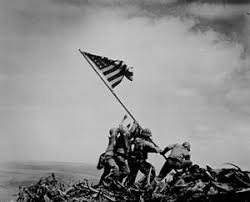 Flag raising at Iwo Jima.
Monday, April 22, 2013
Japanese Internment Camps
Following the Japanese attack on Pearl Harbor on December 7, 1941, President Franklin D. Roosevelt issued Executive Order 9066, which permitted the military to circumvent the constitutional safeguards of American citizens in the name of national defense.
The order set into motion the exclusion from certain areas, and the evacuation and mass incarceration of 120,000 persons of Japanese ancestry living on the West Coast, most of whom were U.S. citizens or legal permanent resident aliens.

These Japanese Americans, half of whom were children, were incarcerated for up to 4 years, without due process of law or any factual basis, in bleak, remote camps surrounded by barbed wire and armed guards.
They were forced to evacuate their homes and leave their jobs; in some cases family members were separated and put into different camps. President Roosevelt himself called the 10 facilities "concentration camps."
Some Japanese Americans died in the camps due to inadequate medical care and the emotional stresses they encountered. Several were killed by military guards posted for allegedly resisting orders.
At the time, Executive Order 9066 was justified as a "military necessity" to protect against domestic espionage and sabotage. However, it was later documented that "our government had in its possession proof that not one Japanese American, citizen or not, had engaged in espionage, not one had committed any act of sabotage." (Michi Weglyn, 1976).
Rather, the causes for this unprecedented action in American history, according to the Commission on Wartime Relocation and Internment of Civilians, "were motivated largely by racial prejudice, wartime hysteria, and a failure of political leadership."
Almost 50 years later, through the efforts of leaders and advocates of the Japanese American community, Congress passed the Civil Liberties Act of 1988. Popularly known as the Japanese American Redress Bill, this act acknowledged that "a grave injustice was done" and mandated Congress to pay each victim of internment $20,000 in reparations.
The reparations were sent with a signed apology from the President of the United States on behalf of the American people. The period for reparations ended in August of 1998.
Despite this redress, the mental and physical health impacts of the trauma of the internment experience continue to affect tens of thousands of Japanese Americans. Health studies have shown a 2 times greater incidence of heart disease and premature death among former internees, compared to noninterned Japanese Americans.

The following quotations are from Personal Justice Denied: Report of the Commission on Wartime Relocation and Internment of Civilians :
"In the detention centers, families lived in substandard housing, had inadequate nutrition and health care, and had their livelihoods destroyed: many continued to suffer psychologically long after their release"
"At Gila, there were 7,700 people crowded into space designed for 5,000. They were housed in messhalls, recreation halls, and even latrines. As many as 25 persons lived in a space intended for four."
"In desert camps, the evacuees met severe extremes of temperature. In winter it reached 35 degrees below zero, and summer brought temperatures as high as 115 degrees. Rattlesnakes and desert wildlife added danger to discomfort."
"When we first arrived at Minidonka, everyone was forced to use outhouses since the sewer system had not been built. For about a year, the residents had to brave the cold and the stench of these accommodations."
*****************************************************************
DIRECTIONS: After reading the above information and quotations about Japanese Interment Camps and looking at the pictures from PBS, write a 10-line response (5-lines if typed) which addresses the following questions:
- Which is more important: safety or freedom?
- Can certain measures, such as internment camps, wiretapping, searching your house without a warrant, being denied a lawyer, and torture be justified during a time of war? Explain which measures you find justifiable and which are not and why you think so.
- How would you feel as an American citizen if you were sent to the types of internment camps that so many Japanese Americans were sent to? What would be the hardest part for you? What would you say to the President and Congress?
Subscribe to:
Posts (Atom)