Showing posts with label English A. Show all posts

Friday, May 15, 2015

"Ghost Soldiers"

The Things They Carried by Tim O'Brien: LAST 3 CHAPTERS!


Listen to "Ghost Soldiers," 5:20:33 to 6:13:25. Follow along on pages 189-218.

Then, listen to "Night Life" and "The Lives of the Dead," 6:13:25 to 7:03:55. Follow along on pages 225-246.

Friday, March 27, 2015

The Things They Carried Vocabulary

Click on THIS LINK to view your vocabulary words and their definitions for Tim O'Brien's The Things They Carried.

Tuesday, March 3, 2015

Animal Farm Vocab

https://docs.google.com/presentation/d/1vWDMSchpYEi7aVORGyPqMhHkf3m-sArlhNkgWEtMUK0/edit?usp=sharing

Thursday, December 11, 2014

English A Midterm Essay Prompt

Compare/Contrast Essay        ___/40

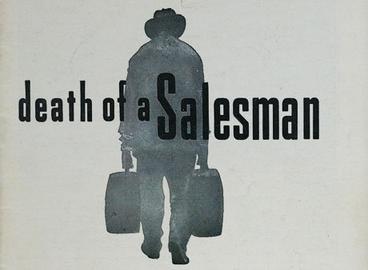
In literary terms, what is a tragedy? What is a tragic hero? Define these terms and discuss how both Shakespeare’s Macbeth and Miller’s Death of a Salesman fit within the tragedy genre and how Macbeth as a character and Willy Loman both fulfill the tragic hero archetype.

Refer to the rubric for planning ideas/directions:
·        Paragraph #1: Name which literary works, authors, and characters you are going to discuss.  Define tragedy and tragic hero. (5 points)
·        Paragraph #2: Discuss Macbeth in Macbeth.  Discuss how the play is a tragedy and Macbeth is a tragic hero. Give at least four specific reasons for your definition. (10 points)
·        Paragraph #3: Discuss Willy Loman in Death of a Salesman.  Discuss how the play is a tragedy and Willy is a tragic hero. Give at least four specific reasons for your definition. (10 points)
·        Paragraph #4: Give and overview of how the stories of Macbeth and Willy Loman are similar and different.  Discuss what the authors’ purposes were for both characters—what point(s) are Shakespeare and Miller making about human nature by writing about tragic heroes? (10 points)
·        **5 points for overall readability (organization and editing)

Monday, November 10, 2014

Death of a Salesman Vocabulary

View the PowerPoint to complete your vocabulary packet on key words from Arthur Miller's Death of a Salesman.


Saturday, August 16, 2014

Literary Terms to Know & Use

For your chosen concept, please complete at least one of each of the following:

  • clear, understandable definitions
  • examples from a familiar children's story (like a fairy tale)
  • examples from a work studied in high school
  • examples from a popular movie, TV show, or other work
  • some sort of graphic illustration to help us remember the concepts (this may be incorporated with an example or examples)

Concepts:
  • conflict (discuss all four types)
  • plot (discuss exposition, rising action, climax, falling action, & resolution)
  • making connections (discuss juxtaposition, foreshadowing, flashback, and allusion)  
  • point of view (discuss the three major types)
  • irony (discuss the three major types & paradoxes)
  • characterization (discuss implicit vs. explicit as well as static vs. dynamic characters and round vs. flat)
  • thematic elements (theme, motif, & symbols, archetypes)
  • author's craft (genre, mood, imagery, & syntax)
  • diction (connotation vs. denotation, oxymoron, & pun)
  • figurative language (discuss simile, metaphor, personification, & hyperbole)
  • sound devices (alliteration, onomatopoeia, slant rhyme, & true rhyme)


Monday, March 10, 2014

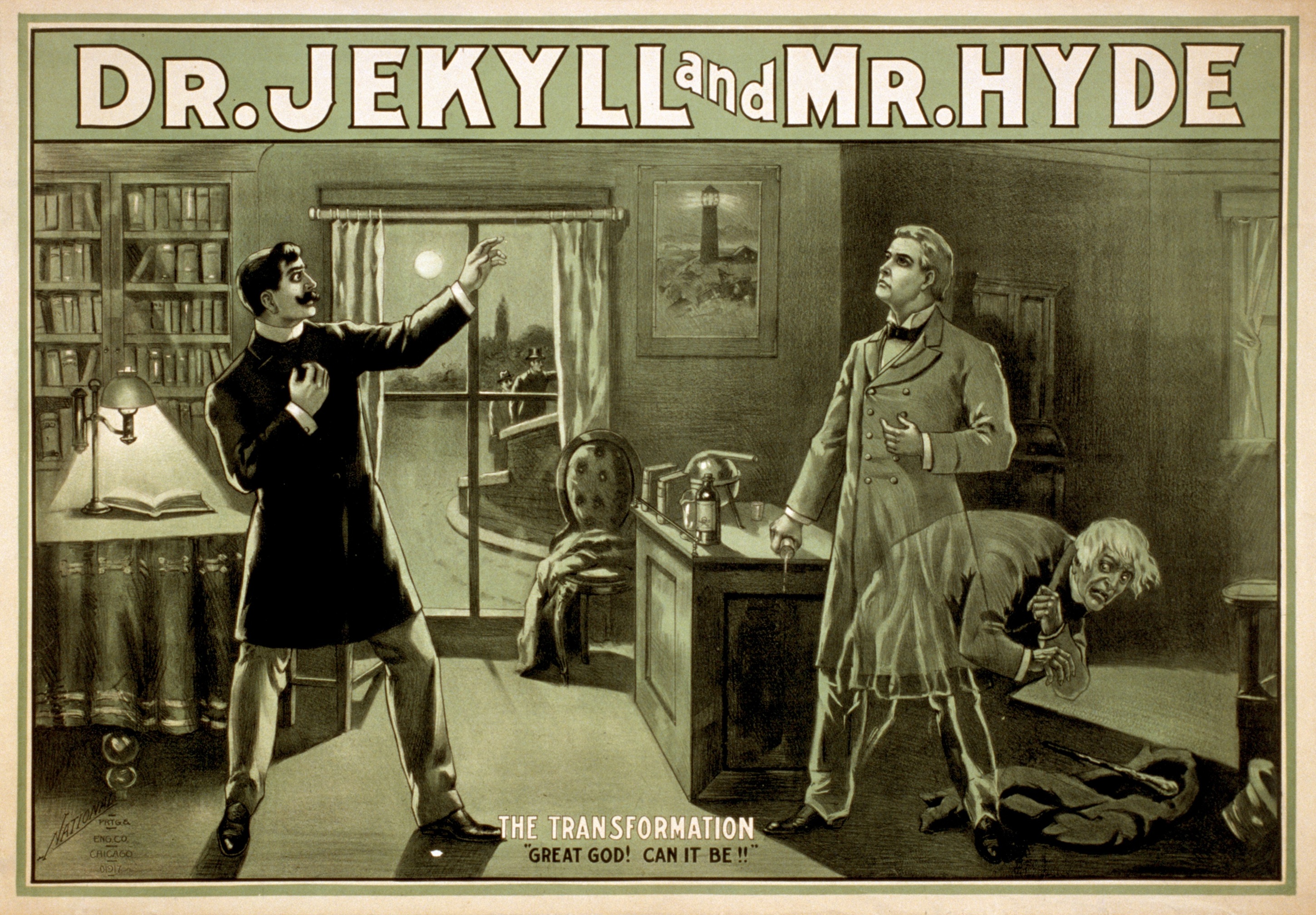
Dr. Jekyll & Mr. Hyde: Creative Writing Activity

The Strange Case of Dr. Jekyll and Mr. Hyde by Robert Louis Stevenson should inspire you to write your own creative piece. Choose one of the following options:
     Write a new ending to the book: perhaps Jekyll and Hyde are not the same person. Suppose they are but they don’t die and either good or evil conquers the body of Jekyll. Suppose Utterson is intrigued by the experiment and decides to try it for himself. These are ideas that you may choose to follow or you may choose to come up with your own ideas.
     Write an original story about a character who struggles with addiction and/or mental illness. Dr. Jekyll becomes addicted to being Hyde--it’s an escape for him. Your story may be based in reality (your own experiences or observations) or completely made up; however, make this a realistic story that truly shows the nature of addiction and/or mental illness.
     Write in one of the genres of The Strange Case of Dr. Jekyll and Mr. Hyde. This novella may be classified in any of the following genres: science fiction, mystery, or gothic (the horror genre has risen from gothic writing). Write your own original story in one of these genres. See directions below for elements to include in the genre of your choice:
     Science fiction: Your story MUST have at least one element of technology (such as Jekyll’s potion) that is not currently developed. Your story must also explore the moral (good versus evil) consequences of that technology. This story may be set in the future, but does not have to be; however, setting is very important in science fiction and in The Strange Case of Dr. Jekyll and Mr. Hyde, so a well-developed setting is a MUST in this writing assignment.
     Mystery: Your story MUST have a mystery to solve (a murder mystery, strange disappearance, theft, or otherwise). Furthermore, you MUST include clues/foreshadowing (like the handwriting in The Strange Case of Dr. Jekyll and Mr. Hyde) and multiple suspects. Last, include at least one “red herring” (a “red herring” is a clue that leads the reader in the wrong direction but can be explained logically in the end; in The Strange Case of Dr. Jekyll and Mr. Hyde, the will created a red herring that Hyde was blackmailing Jekyll, for example).
     Gothic: Your story MUST include at least four of the following elements:
     ruined buildings which are sinister or which arouse a pleasing melancholy,
     dungeons, underground passages, crypts,catacombs, labyrinths, dark corridors, creepy basements/attics, and/or winding stairs,
     shadows, a beam of moonlight in the blackness, a flickering candle, or the only source of light failing (a candle blown out or an electric failure),
     extreme landscapes, like rugged mountains, thick forests, or icy wastes, and extreme weather,
     omens and ancestral curses,
     magic, supernatural manifestations, or the suggestion of the supernatural,
     a passion-driven, willful villain-hero or villain,
     a hero whose true identity is revealed by the end of the novel,
     horrifying (or terrifying) events or the threat of such happenings.

NOTE: You will conference with your teacher at least 1-2 times before turning in a final draft. Also, please refer to the rubric attached for more information about expectations.


Tuesday, January 28, 2014

Dr. Jekyll and Mr. Hyde Audiobook & Assignments for Catch-up Work

If you missed in-class reading of Dr. Jekyll and Mr. Hyde by Robert Louis Stevenson, you can catch up by listening to the audio version and following along in your book. Please see below for where today's chapter begins.

Dr. Jekyll and Mr. Hyde Vocabulary Definitions


1.  Austere: strict with yourself

2.  Reprove: criticize or correct

3.  Countenance: appearance or face (how you look)

4.  Somber: gloomily dark

5.  Condone: to approve or at least not disapprove

6.  Iniquity: a wicked act or sin

7.  Ruminate: to think over something

8.  Duality: two-sided, or double-natured

9.  Perplex: to confuse

10.                   Calamity: a great misfortune or disaster

11.                   Lament: feel or express sadness or regret

12.                   Volatile: highly explosive

13.                   Scrutiny: looking at very carefully/closely

14.                   Enigma: something mysterious or puzzling

15.                   Aversion: strong feeling of dislike

16.                   Seclusion: alone or separate from others

Wednesday, January 15, 2014

English A Midterm Essay

Multi-Work Theme Essay.                           ___/20 points

This should be a well-formed essay with a clear thesis, ample supporting evidence, strong organization, and editing that has made it very readable! See the rubric given to you by your teacher. 

You should choose one of the following prompts to write about:

OPTION A:

Human versus society is the unifying conflict in the works that we studied this semester. In a unified essay, explore what the authors (Rand/Jackson and Shakespeare) are saying about why the individual often feels at odds with society as a whole as well as your own observations from real life.

Think about this: When should we rely on ourselves and when must we rely on others?


OPTION B:

Individuality is a theme that we’ve explored this semester. In a unified essay, explore what the authors (Rand/Jackson and Shakespeare) are saying about the nature of being an individual as well as your own observations from real life.

Think about this: Is being different a blessing or a curse?
 

 OPTION C:

Decisions and the consequences of those decisions is a theme that we’ve explored this semester. In a unified essay, explore what the authors (Rand/Jackson and Shakespeare) are saying about how we make choice; additionally, draw on your own observations from real life.

Think about this: How do we know that the choices we make are the right choices?


Tuesday, October 22, 2013

Othello Pre-Reading Definitions

Tragedy:
  • a story (usually a play) dealing with tragic events and having an unhappy ending, esp. one concerning the downfall of the main character.

Elements of Tragedy:
  • Tone: causes fear and pity
  • Plot: cause & effect, catastrophe & resolution which is sad but satisfying (catharsis—cleansing of pity & fear)
  • Tragic hero

Tragic hero:
  • Noble, “good” character
  • With one Fatal Flaw in his/her personality that is his/her undoing (ex. pride, greed)

Thursday, October 17, 2013

Othello Vocabulary

Beguile- to influence by using tricky means
Censure- strong expression of disapproval
Chaste-sexually innocent
Cunning-doing something slyly or sneakily/clever
Devise-to invent or plan
Disposition-overall mood
Ignorance-lack of knowledge
Insinuate-to say something without directly saying
Malice-desire to hurt someone out of meanness
Modest-not showy
Notorious-famous (usually for something bad)
Paradox-a statement that contradicts itself but expresses a truth
Repent-to feel sorry for or make up for a past action
Solicit-trying to get something from someone else
Vice-immoral or evil practice/habit

Vouch-to support or guarantee something

Thursday, September 26, 2013

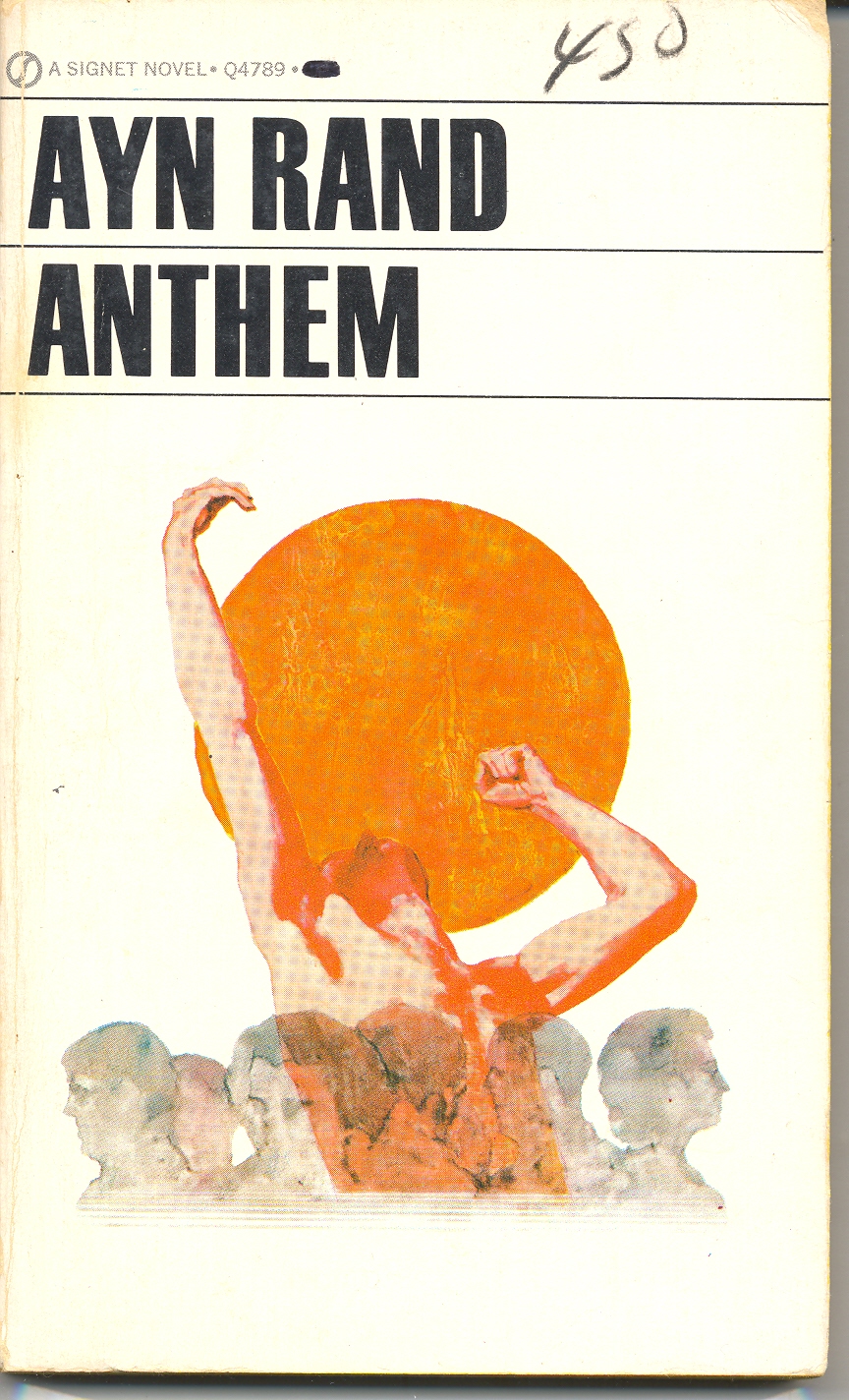
Anthem: End of the Book Questions

1. Sign int to your Google/Gmail account.

2. Follow the link to the GoogleDoc to answer ONE of the end of the book questions.

3. Additionally, you should comment on another person's response. Your comment should either ask a critical question or add to the response by adding new insight (a quotation or additional detail from the book or a connection to another book/real life, for example).


Tuesday, September 3, 2013

Literary Terms to Know & Use

For your chosen concept, please complete the following:

  • clear, understandable definitions
  • examples from a familiar children's story (like a fairy tale)
  • examples from a work studied in high school
  • examples from a popular movie, TV show, or other work
  • some sort of graphic illustration to help us remember the concepts (this may be incorporated with your examples)
Concepts:
  • conflict (discuss all four types)-Bryan
  • plot (discuss exposition, rising action, climax, falling action, & resolution)-Jesstine
  • making connections (discuss foreshadowing, flashback, and allusion)-Jade or Danielle  
  • point of view (discuss the three major types)-Joey
  • irony (discuss the three major types & paradoxes)-Koree
  • characterization (discuss protagonist vs. antagonist as well as static vs. dynamic characters and foils)-Bry
  • thematic elements (theme, motif, & symbols, archetypes)-Janelle
  • author's craft (mood, juxtaposition, imagery, & diction)-Megan
  • diction (connotation vs. denotation, oxymoron, & pun)-Jade or Danielle
  • figurative language (discuss simile, metaphor, personification, & hyperbole)-Celenia
  • sound devices (alliteration, onomatopoeia, slant rhyme, & true rhyme)-Adara

Thursday, June 6, 2013

Quotation ID Exemplars

"After all the highways, and the trains, and the appointments, and the years, you end up worth more dead than alive."


  • Willy says you are worth more dead than alive. I think this foreshadows whats gonna happen with the suicide because he had life insurance of 20,000 I believe and that is how much he was worth dead when he tried working his whole life so that his family could be stable and he thought the only way that could happen was if he died. It shows how this play was a tragedy.


"The jungle is dark but full of diamonds, Willy."


  • Ben was saying this to Willy when Willy was in one of his episodes toward the end of the play and I think it means money is out there you just gotta do whatever you have to do for it. I think in Willy's head Ben was in a way telling him its okay to kill yourself because money is the most important thing to Willy.


 "S'pose you didn't have nobody. S'pose you couldn't go into the bunk house and play rummy 'cause you was black. How'd you like that? S'pose you had to sit out here an' read books. Sure you could play horseshoes till it got dark, but then you got to read books. Books ain't no good. A guy needs somebody - to be near him. A guy goes nuts if he ain't got nobody. Don't make no difference who the guy is, long's he's with you. I tell ya, I tell ya a guy gets too lonely an' he gets sick."


  • Crooks says this to Lennie when he finally lets him into his room. While everyone else is over playinger horseshoes. Crooks is referring to to the fact that being alone is awful and how he's segregated for being black. This also has to do with the theme of loneliness. Because unlike George and Lennie, he is alone, like everyone else in the book.


 "Whatever we ain't got, that's what you want. God a'mighty, if I was alone I could live so easy. I could go get a job an' work, an no trouble. No mess at all, and when the end of the month come I could take my fifty bucks and go into town and get whatever I want."

  • In this quote George is explaining and ranting to Lennie on how better life would be without him. He explodes all of his frustration on to Lennie. And I feel like hurts Lennie on the inside. But honestly he is to slow to say anything back. George is hard on Lennie. Read that quote and anyone would think so. But in all reality George loves Lennie to death. And if he feel like he is hard on him just to get him in gear.


Wednesday, June 5, 2013

Assessment 21: Reading Comprehension & Essay

1.     Go online to AcademicMerit.com.
2.     Log in.
3.     Select the Assessments 21 button.
4.     Read the “Audie Murphy” text.
5.     Complete the Comprehension Questions (Worth 5 Points).
6.     Complete the Writing Prompt (remember to refer to the rubric and the text before you submit your response) (Worth 20 Points).


Tuesday, May 21, 2013

Fahrenheit 451 by Ray Bradbury: Culminating Writing Activity


Choose one of the topics below.

  • The importance of asking “why.”
  • Censorship and the suppression of ideas.
  • The power and value of ideas.
  • The power of interpersonal relationships.
  • Montag as a dynamic character.
  • The power of conflicting ideas in developing a concept of truth, and the risk to the uneducated or ignorant of falling prey to propaganda.
  • The deadening power of technology when it suppresses or replaces true human interaction or experience.
  • The value and meaning of a free society. (While there are some risks to a free society, the threat of a society that suppresses freedom is the very possibility of being truly human.)

Once you have chosen a topic, develop it into a thesis statement. Remember that you are formulating a “theory” about the novel that you will have to “prove” with reasons and examples in your body paragraphs.  You should incorporate at least two direct quotations (that are correctly introduced and have page numbers) in your body paragraphs as well.

Example Thesis Statements:
  • In Bradbury’s Fahrenheit 451 and in real life, censorship causes a loss of societal growth and individual thought and personal happiness.  (Note, that in this thesis, at least one of your body paragraphs would focus on real life.)
  • In Bradbury’s Fahrenheit 451, the society loses its power and purpose because individuals lose their ability to live a full life involving relationships, meaningful activities, and rich ideas.


You may use this planning outline below to help you:

Paragraph 1:  Intro & thesis
          Thesis: __________________________________________________________ ______________________________________________________________________
______________________________________________________________________

Paragraph 2: Support Paragraph
          Topic Sentence: ___________________________________________________ ______________________________________________________________________
______________________________________________________________________
Support from novel (quotation w/ page #): _______________________________ ______________________________________________________________________
______________________________________________________________________

Paragraph 3: Support Paragraph
          Topic Sentence: ___________________________________________________ ______________________________________________________________________
______________________________________________________________________
          Support from novel (quotation w/ page #): _______________________________ ______________________________________________________________________
______________________________________________________________________

Paragraph 4: Support Paragraph
          Topic Sentence: ___________________________________________________ ______________________________________________________________________
______________________________________________________________________
          Support from novel or real life: ________________________________________ ______________________________________________________________________
______________________________________________________________________

Paragraph 5: Conclusion (restate the thesis and main ideas and provide a sense of conclusion and purpose to your essay). 


OR:  Choose this Creative Option: 

Re-write the ending to Fahrenheit 451 or write a new chapter.  Many readers are disappointed that Clarisse does not reappear at the end, or that we never know exactly what happens to Faber, or Montag, for that matter.  While writing, you must consider how the characters would actually act and what they would actually say and do based on our knowledge of them.  For some ideas (Bradbury himself has questioned the ending and has been tempted to change it) see the Afterword (starting on page 167).  Your piece should clearly reflect your understanding of the themes and characters in the novel (in other words, don’t go completely off track and imagine Montag ending up in an ice crystal on Mars) as well as incorporate stylistic elements that Bradbury utilizes.


Wednesday, April 24, 2013

Fahrenheit 451 Vocabulary

Odious: stinky or disgusting
Jargon: words that don't make sense or are specific to a career/field
Centrifuge: something spinning at high speeds
Cacophony: bunch of loud noise
Feign: pretend or fake something
Melancholy: sadness
Cadence: rhythmic flow
Sieve: container with holes, a strainer
Insidious: deceitful trickery
Invigorate: to make more lively
Ignorance: not knowing/lack of knowledge
Phosphorescent: glowing
Luminous: radiating or reflecting light
Valise: suitcase
Desolation: Emptiness
Oblivion: Nothingness


Monday, April 22, 2013

MLA Citations

To practice writing correct citations, watch me model one, then let's do one together, and last, you will do two on your own.  Use NoodleTools to help you.

For English A, cite the following:

"Meet a Warrior." Mission. 2013. Wounded Warrior Project. 22 Apr. 2013 
<http://www.woundedwarriorproject.org/mission/meet-a-warrior.aspx>.
 "The Things They Carried." The Big Read. National Endowment for the Arts. 22 Apr. 2013 <http://www.neabigread.org/books/thethingstheycarried/>.

http://www.va.gov/landing2_vetsrv.htm
Tim O'Brien's The Things They Carried


For English B, cite the following:


"Genocide Studies Program." 2010. Yale University. 22 Apr. 2013 <http://www.yale.edu/gsp/index.html>.

 "Genocide Watch." . 19 Apr. 2013. International Alliance to End Genocide. 22 Apr. 2013 <http://www.genocidewatch.org/>.

Peace Pledge Union.  <http://www.ppu.org.uk/genocide/>
United States Holocaust Memorial Museum.  <http://www.ushmm.org/>
Night by Elie Wiesel