Friday, September 19, 2014

Senior Yearbook Information!

Class of 2015 Yearbook Information
All of the information below is due by October 24th, 2014
Items submitted after this date will not be guaranteed inclusion in the yearbook.
 Senior Pictures:
Please upload all photos directly to the Yearbook Website:
-Go to: www.replayit.com  Password: redstorm
*You will need to register with the website and create your own log in and password.  Once registered please upload your senior picture directly through this link.  The pictures should be of HIGH quality. All pictures will be printed in black and white for the yearbook.
 “Looking Back” Photos:
Looking Back Photos are not baby pictures.  Yearbook is NOT excepting baby photos.  Looking back photos should be from elementary school, middle school or early high school. Photos should be of groups of students at different events (sporting events, dances, birthday parties, etc.)  Submit the Looking Back Photos the same way you submit your senior picture.
 Senior Write Up:
Your senior write up needs to be submitted in Times New Roman size 8 font and can be no more than 625 characters (including titles and spaces).  Senior write up’s that are inappropriate or do not meet the character limit will be edited by the yearbook staff as seen fit. Please email your senior write up to shsyearbook14@gmail.com.  See example of senior write up below.
EXAMPLE:
John Doe
Senior Name: Seriously John Doe Nickname(s): Johnny, Johnny D, DoeDoe, JD, etc. Activities: Key Club (14), Speech and Debate (3,4), Lacrosse (14, Capt. 4) Fondest Memories/Hangouts: Drive-in with KC, Prom 2006 w/ HG, Homecoming football game w/ GC, KS, SE, MG, EC, working at the Dairy Corner. Quote: "Chemistry is a class you take in high school or college, where you figure out two plus two is 10, or something." –Dennis Rodman Thank You: Mom and Dad for everything, my little sister for staying out of my way, my friends for being there for me.
 Senior Will Items:
Each senior may submit 2 Senior Will items.  Senior Will items that are inappropriate or do not meet the limit set by the yearbook staff will be removed or edited as seen fit.  Please email senior will items to shsyearbook14@gmail.com.  See an example of a senior will below:
EXAMPLE:
I, John Doe, leave endless laps in the pool, swim team bus rides, and State meets to A.M, B.P, E.G and A.T.
                     
Questions????  See Mr. Huntington in room C107 or call at (207)730-5079

Monday, September 15, 2014

Week 3: Fractured Fairy Tales

1.    View/read the following fractured fairy tales.  A fractured fairy tale uses familiar fairy tale (sometimes fable/legend) stories, but subverts some elements, such as characters, setting, points of view, and/or plot points.  They are usually humorous and satirize the genre or modern life in some way.
2.    Write a brief explanation about how each of the fractured fairy tales that you viewed/read subverts the original and what humorous commentary the tale seems to make.
3.    Write a rough draft of your own fractured fairy tale, using a different fairy tale than the above mentioned.  It should have:
a.    A clear conflict
b.    A developed protagonist and at least one other character
c.    A setting: time and place
d.    An exposition, rising action, climax, falling action, and a resolution
e.    Obvious references to the original fairy tale
f.     Obvious differences from the original tale.  You may consider telling the story from the point of view of the “villain” or writing a sequel or prequel to the story or making the story updated (the female saves the man, for example)


*Fairy tales to consider:  “Little Red Riding Hood,” “Cinderella,” “Hansel & Gretel,” “Jack and the Beanstalk,” “Rumpelstiltskin,” “Goldilocks & the Three Bears,” “Sleeping Beauty,” “Snow White.”  You may use other fairy tales, of course, but this list should give you some ideas…


Tuesday, September 9, 2014

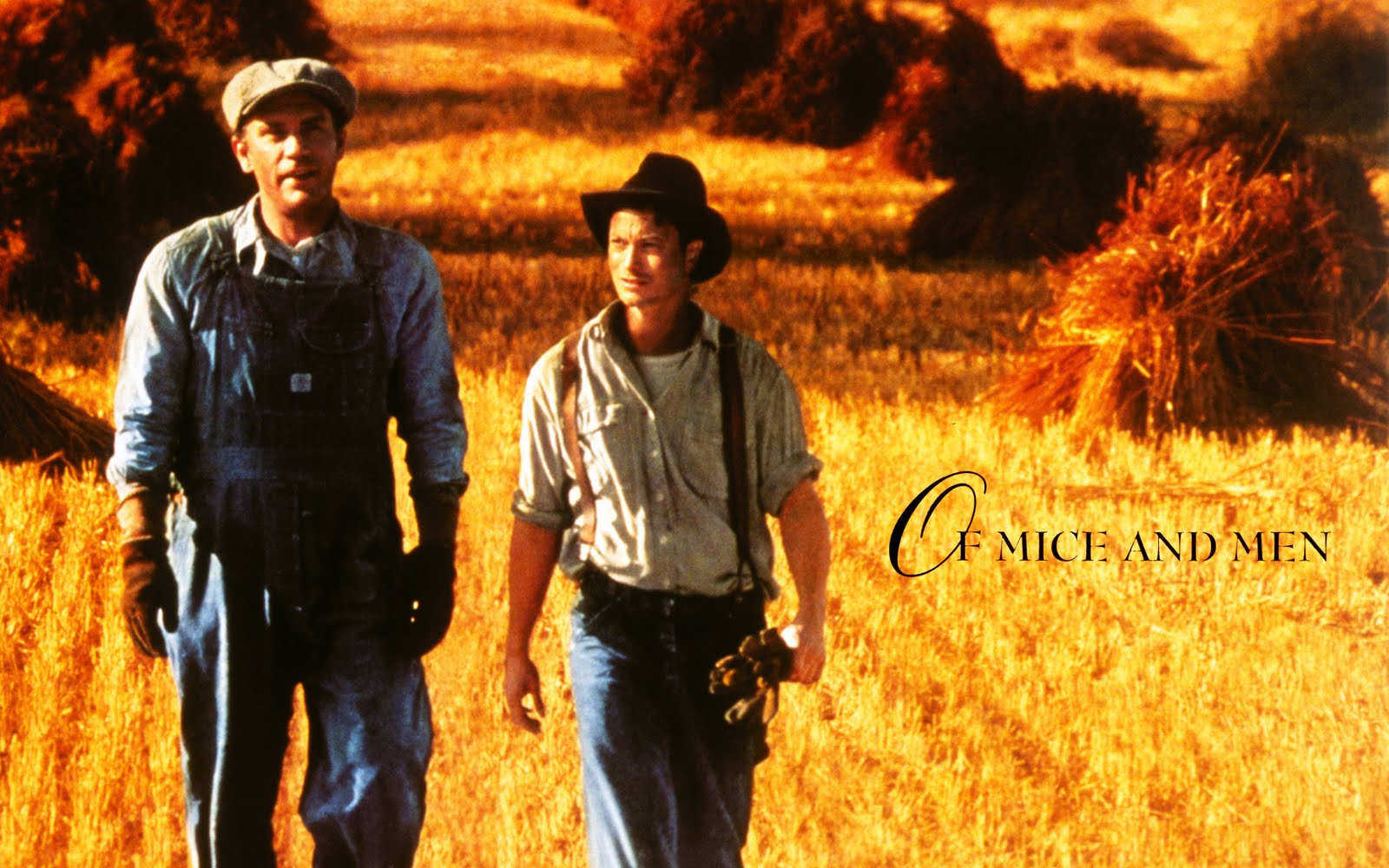
Of Mice and Men Vocabulary

Use this PowerPoint to fill in your vocabulary words and their definitions on your vocabulary packet for John Steinbeck's Of Mice and Men.


Monday, September 8, 2014

Creative Writing Week 2: Fables

1.    Read the stories: "The Tortoise and the Hare" and "The Lion and the Mouse." For each of the stories, find and record: the characters, the setting, and the theme. Then, explain which genre these stories are and why you think so.
2.    Write your own fable.  Remember, a fable should be short, have animal characters and provide a lesson to the readers, often stated at the end of the story as “the moral of the story.”
3.    Edit your fable.  There should be no spelling or grammatical errors.  If you need assistance, see Ms. Kappelman or another teacher for editing tips.  You should turn in at least two (1st & final) drafts of your fable so that I can see your editing.
4.    Find a fairy tale to read/study.  Read it, and complete this Fairy Tale Analysis worksheet to analyze the story.
5.  If time allows, read your free read book and journal for a bonus point or two!


Wednesday, September 3, 2014

Five Approaches to Psychology

You have learned about the five major approaches to psychology--behavioral, biological, cognitive, humanistic, and psychoanalytic.
To review, watch the video and take the quiz from the lesson taught by Polly Peterson!

Tuesday, September 2, 2014

Creative Writing Week 1: Fiction Elements & Genres

1.    Complete this worksheet about the elements of fiction. You will need to use theReadWriteThink link to find your answers. Please note, the elements are in a different order on the website than they are on the worksheet.
2.    Learn about the different types of literary genres with this slideshare presentation. As you go through the presentation, take notes answering the following questions:
1.    What is a genre?
2.    What are the main genres of fiction?
3.    What are the defining characteristics of each genre?
4.    Which genre do you find most appealing and why?
3.    Focus in on some of the oldest forms of fiction: myths, legends, fables, folktales, and fairy tales.
1.    In a few sentences, write down what you think the similarities and differences between these terms are.

2.    Visit the following websites and create a good definition for each of the terms (myths, legends, fables, folktales, and fairy tales):http://www.ability.org.uk/mytholog.html,http://classiclit.about.com/cs/10th14thcentury/a/aa_definemyth.htm.

Saturday, August 16, 2014

Literary Terms to Know & Use

For your chosen concept, please complete at least one of each of the following:

  • clear, understandable definitions
  • examples from a familiar children's story (like a fairy tale)
  • examples from a work studied in high school
  • examples from a popular movie, TV show, or other work
  • some sort of graphic illustration to help us remember the concepts (this may be incorporated with an example or examples)

Concepts:
  • conflict (discuss all four types)
  • plot (discuss exposition, rising action, climax, falling action, & resolution)
  • making connections (discuss juxtaposition, foreshadowing, flashback, and allusion)  
  • point of view (discuss the three major types)
  • irony (discuss the three major types & paradoxes)
  • characterization (discuss implicit vs. explicit as well as static vs. dynamic characters and round vs. flat)
  • thematic elements (theme, motif, & symbols, archetypes)
  • author's craft (genre, mood, imagery, & syntax)
  • diction (connotation vs. denotation, oxymoron, & pun)
  • figurative language (discuss simile, metaphor, personification, & hyperbole)
  • sound devices (alliteration, onomatopoeia, slant rhyme, & true rhyme)